
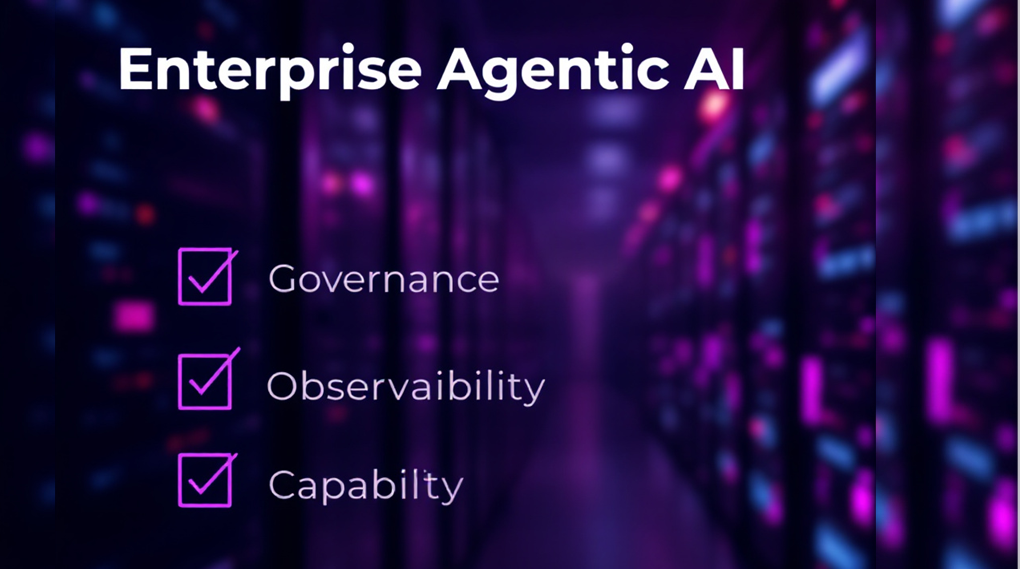
Insurability Is the New Production Readiness for AI Agents
When it comes to rolling out AI agents in your enterprise, your engineering team probably won't be the bottleneck. Your cyber insurer will be.
Also published on LinkedIn
Read on LinkedInJens Ernstberger recently shared a sharp observation that resonated deeply with our team: your engineering team probably won't be the bottleneck for your AI agent rollout — your cyber insurer will.
That framing is spot on.
At Audition AI, we're building an enterprise AI platform that runs entirely inside our customers' Azure environments. We live at the intersection of ambition and constraint every day — not just "can we build it," but "can this be governed, insured, audited, and trusted at scale?"
Jens' post captures something many teams are just beginning to feel: AI agents aren't just a technical risk — they're an underwriting problem.
Security, Compliance, and Observability Add Friction — On Purpose
There's a truth most AI product teams don't like to say out loud:
Security, compliance, and observability add friction.
On our team, the battle we fight every day is delivering powerful enterprise AI with as little friction as possible — without compromising on governance. That's hard, especially when you choose to start from zero.
We made a deliberate decision early on:
Everything is off by default.
- • No connectors enabled
- • No data sources accessible
- • No agent permissions assumed
- • No orchestrations granted implicitly
Instead, we let the admin, security, and compliance teams decide:
- What the AI can access
- Who can do what
- Which orchestrations are allowed
- Under what conditions actions can be taken
This is slower than flipping the "all on" switch. It's undeniably harder than platforms that enable broad access by default and ask for forgiveness later.
But "all on" is how you get:
- Over-privileged agents
- Overshared data
- Plaintext secrets
- And systems no insurer wants to touch

Insurers Don't Fear AI — They Fear Unverifiable Control
Jens is right: insurers don't price novelty, they price controls they can verify.
When underwriters look at many AI deployments today, they see:
- Agents acting with standing privileges
- API keys treated like passwords
- Limited or mutable audit trails
- No reliable kill switch
- No clear blast-radius definition
From their perspective, that's not innovation — it's unbounded liability.
This is why concepts like:
- Just-in-time access
- Zero standing privileges
- First-class agent identities
- Immutable audit logs
- Emergency shutdown and rollback
aren't "security theater." They are the preconditions for insurability.

Building Below the Curve (On Purpose)
In traditional security, we know how to get "below the curve":
- Enforce MFA
- Close exposed services
- Implement least privilege
- Prove incident readiness
With AI agents, that baseline is still emerging.
At Audition, we've tried to translate those hard-won lessons into the AI era:
- Azure Entra–native identity for users and agents
- Explicit permission grants instead of ambient access
- Full transparency into data sources, prompts, tool calls, and outcomes
- Governance rules that shape agent behavior and protect data
- Everything observable, everything reviewable
It's not effortless — and we don't pretend it is.
The Human Side of Friction
Last night, I got a message from a customer nearing the end of their initial onboarding.
They thanked us — not just for the technology, but for taking the journey with them and their entire company.
They acknowledged it's been a process. They were patient. They wanted to learn.
And together, we worked through how all the pieces fit:
- • Identity
- • Access
- • Data
- • Agents
- • Orchestration
- • Risk
Their takeaway wasn't frustration — it was confidence. Confidence that what they're deploying is not just capable, but secure, observable, and defensible.

That's when the friction pays off.
Verifiable Security Is the Enabler
Jens closed his post with a line that should be a north star for anyone building agentic AI:
"Verifiable security controls aren't the blocker. They're the enabler."
I couldn't agree more.
If we want AI agents in production — really in production — they must be:
- Governable
- Auditable
- Insurable
And that means building systems that security teams, compliance teams, and yes, cyber insurers can understand and trust.
This article was inspired by Jens' post, and I hope more voices like his keep pushing the conversation forward. The future of enterprise AI won't be won by who ships fastest — but by who earns the right to be deployed.
Ready to Build Insurable AI?
Learn how Audition AI's governance-first platform helps enterprises deploy AI agents that security teams, compliance teams, and cyber insurers can trust.
View this full article at audition-ai.com
AuditionAI: Containerized, Secure, Compliant Enterprise AI platform that runs in your company's own cloud.
© 2026 Saberin Data Platform, Inc. All rights reserved. Privacy Policy and Terms of Service at audition-ai.com.